As the popularity of RV camping continues to rise, understanding how to calculate solar panel capacity for RV use is crucial. According to a report by the Solar Energy Industries Association, residential solar installations, including RV applications, grew by over 23% in 2022. This growth highlights the increasing reliance on solar energy for off-grid adventures.
Expert Tom McCarthy, a recognized authority in solar technology, states, "To maximize your RV’s energy efficiency, understanding solar capacity is essential." His insights emphasize the importance of accurately sizing solar panels to meet energy demands. Many RV owners overlook factors like appliance wattage, battery capacity, and sunlight availability.
Calculating solar panel capacity accurately can save money and enhance the RV experience. With proper assessments, users can prevent over or under-sizing their solar systems. However, not all resources provide reliable information. This makes it vital to consult trusted sources when exploring how to calculate solar panel capacity for RV. By doing so, RV enthusiasts can ensure a sustainable and enjoyable journey.
Understanding Solar Panel Capacity Basics for RVs
Understanding solar panel capacity is essential for maximizing the efficiency of your RV's electrical system. Solar panel capacity is measured in watts, indicating how much energy it can generate in ideal conditions. According to the U.S. Department of Energy, a 100-watt solar panel may produce about 300-600 watt-hours daily, depending on sunlight availability. For RVs, this daily output can power lights, appliances, and electronics, enhancing your off-grid experience.
To calculate the required solar panel capacity, begin by assessing your energy needs. List all electrical devices and their wattage, then estimate daily usage in hours. Multiply wattage by daily hours to find total energy consumption. For example, if you use a 60-watt LED light for 5 hours, that equals 300 watt-hours. Using this data helps determine how many panels are needed.
Tip: Consider seasonal variations in sunlight. In winter, you may need up to 30% more capacity. Also, battery storage must match solar output to avoid shortages. Monitor your system's performance and adjust accordingly. Regular checks can reveal inefficiencies you may have overlooked. Another aspect to consider is the angle of your solar panels. A poor angle can significantly reduce energy collection even in prime sunlight.
Factors Affecting Solar Panel Capacity for RV Use
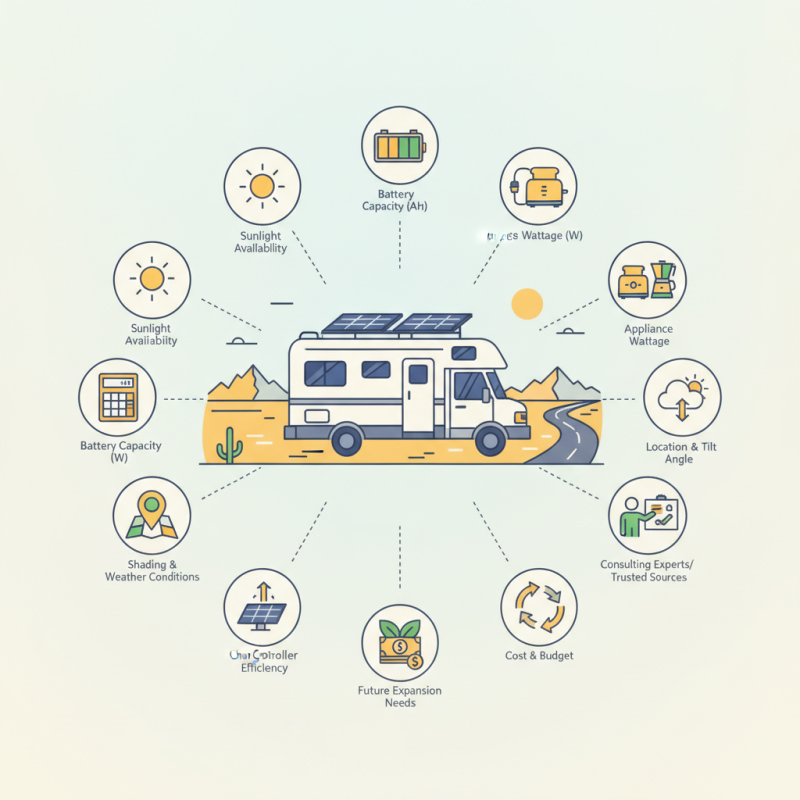
When calculating solar panel capacity for RVs, several factors come into play. One major element is the size of the RV. Larger RVs typically require more power. This means a higher capacity system is needed to meet that demand. Additionally, the number of appliances used in the RV directly impacts the energy requirements. If you have multiple devices running simultaneously, ensure your solar capacity can cover that usage.
Another crucial factor is sunlight exposure. The amount of direct sunlight your RV encounters significantly affects energy production. Areas with more sunlight can generate more power, while shaded areas decrease efficiency. You'll also want to consider battery storage. If your RV batteries hold less energy, you'll need more solar panels to compensate for that. Lastly, the angle and orientation of your solar panels can influence their effectiveness. Panels positioned correctly will harness more energy.
Other elements include seasonal changes and weather conditions. In winter, for example, solar production drops. Similarly, cloudy days reduce power generation. You might need to recalibrate potential energy needs based on these conditions. Understanding these factors requires thoughtful consideration. Building a solar system is not a one-size-fits-all approach. Each RV setup is unique, and assessing these variables will lead to better outcomes.
Step-by-Step Calculation of Energy Needs for Your RV
Calculating energy needs for your RV can be straightforward. Start by listing all the devices you plan to use. Multiply the wattage of each device by the number of hours you expect to use it daily. This gives you the total watt-hours needed per day. For example, if you have a fridge using 150 watts and plan to run it for 24 hours, that’s 3,600 watt-hours.
Next, account for inefficiencies. Solar systems are not 100% efficient. It's wise to add about 20% more capacity to your daily needs. If your total daily consumption is 1,500 watt-hours, consider a panel system that can generate 1,800 watts. Think about the sunlight hours available in your area. This helps determine the size of the solar panel system you need.
Lastly, consider your battery storage capacity. The batteries should match your energy consumption and the solar panel output. This requires careful calculations. You might find that your initial estimates are off. It’s essential to keep adjusting your numbers based on real usage. Tracking actual energy consumption can help refine your calculations over time. This attention to detail can significantly improve your RV solar setup.
Solar Panel Capacity for RV
Selecting the Right Solar Panel Size Based on Calculated Capacity
Selecting the right solar panel size based on calculated capacity is crucial for RV enthusiasts. A well-sized system ensures you have enough energy while staying within budget. According to the National Renewable Energy Laboratory (NREL), the average energy consumption for an RV is about 30 amp-hours per day. This means you need to accurately assess your power requirements.
To begin, calculate your energy needs. List all appliances and devices you plan to use. Each device will have a wattage rating, which you’ll need to add for a total watt-hour requirement. Remember, the solar panels convert sunlight into power. A typical 100W panel produces around 300-500 watt-hours daily, depending on sunlight availability. Thus, knowing your daily watt-hour requirement helps streamline your panel choices.
Consider environmental factors as well. Seasonal changes affect sunlight exposure. In winter months, output can drop significantly. This requires adjusting your panel size or incorporating a battery system for energy storage. Thoughtful sizing of your solar panels can prevent frustrating power shortages. Reflecting on these aspects ensures that your solar setup meets your RV lifestyle requirements without overspending or underperforming.
10 Best Ways to Calculate Solar Panel Capacity for RV
| Method |
Description |
Capacity (W) |
Use Case |
| Daily Energy Needs Calculation |
Calculate total daily watt-hours needed. |
300W |
Small RV appliances |
| Solar Insolation Estimation |
Estimate average sunlight hours per day. |
200W |
Long-term travel |
| Battery Capacity Consideration |
Match panel size to battery capacity. |
400W |
Extended trips |
| Load Calculation |
Calculate total wattage needed for simultaneous loads. |
350W |
Powering multiple devices |
| Panel Efficiency |
Consider the efficiency of solar panels. |
220W |
Performance optimization |
| Shading Assessment |
Evaluate potential shading on panels. |
150W |
Limited sunlight exposure |
| Seasonal Variations |
Account for seasonal changes in sunlight. |
350W |
Seasonal travel planning |
| Type of Solar Panel |
Select between monocrystalline or polycrystalline. |
250W |
Space-constrained RVs |
| Installation Angle |
Consider optimal angle for solar capture. |
300W |
Permanent installations |
| Backup System |
Include backup generator capacity. |
600W |
Off-grid living |
Evaluating Battery Storage Options to Optimize Solar Power Usage
When considering solar power for your RV, evaluating battery storage is crucial. The battery is what stores energy for later use. Understanding different battery types can help maximize your solar system. Lead-acid, lithium, and AGM batteries offer distinct advantages. Each type has its own charging speed and lifespan.
Tips: Choose the right battery size based on your energy needs. A larger capacity means more stored energy. However, it may increase weight and cost. Do not overlook maintenance needs. Regular checks can prolong battery life.
Optimizing your solar setup includes balancing solar panel output with battery capacity. If panels generate more energy than batteries can store, you can waste potential. Keep track of your daily energy usage. This helps in adjusting the setup to prevent overload or underutilization.
Tips: Monitor weather conditions. Clouds can lower panel output, affecting battery charge. Be prepared for unexpected energy demands. Planning for these uncertainties enhances reliability. Always review your system's performance. Reflecting on energy patterns can lead to smarter decisions.
Conclusion
Calculating solar panel capacity for an RV is essential for maximizing energy efficiency during your travels. To begin, it's crucial to understand the basics of solar panel capacity, which directly impacts the RV's power supply. Factors such as the energy consumption of appliances, available sunlight, and panel efficiency play a significant role in determining how much solar power is needed.
The process of calculating energy needs involves assessing your RV's power consumption and then selecting the appropriate solar panel size based on these calculations. Additionally, evaluating battery storage options is key to ensuring optimal use of solar power, allowing you to store energy for use when sunlight is scarce. By following these steps, anyone can learn how to calculate solar panel capacity for RV efficiently, ensuring a reliable and sustainable energy solution for their adventures.

 ConTech Solar