A power outage can turn ordinary tasks into urgent decisions: keeping a phone charged, preserving medicine, or running a small refrigerator. The U.S. Energy Information Administration reported that electricity customers averaged 5.5 hours of interruptions in 2022, including major events; without those events, the average was 2.1 hours. The figures are U.S.-specific, but they show why backup planning matters. A solar panel kit can help, though it is not an automatic replacement for household power.
This guide explains how to use a solar panel kit for emergency backup power, from choosing essential loads to connecting panels, a charge controller, a battery, and an inverter. The National Renewable Energy Laboratory’s PVWatts tool estimates solar production using location and system details, underscoring a practical limit: cloudy skies, season, and panel placement change the energy available. A 100-watt panel on a bright afternoon is not a promise of 100 watts all day. Check appliance starting surges, battery capacity, and inverter ratings before plugging anything in. Keep equipment dry, follow the manufacturer’s instructions, and leave installation work to a qualified professional when wiring exceeds your experience. Small details matter. A fridge cycling overnight can drain a battery faster than expected. Even careful estimates can be wrong, so test the setup before an emergency, then revise the plan. That is the less tidy part of preparedness.
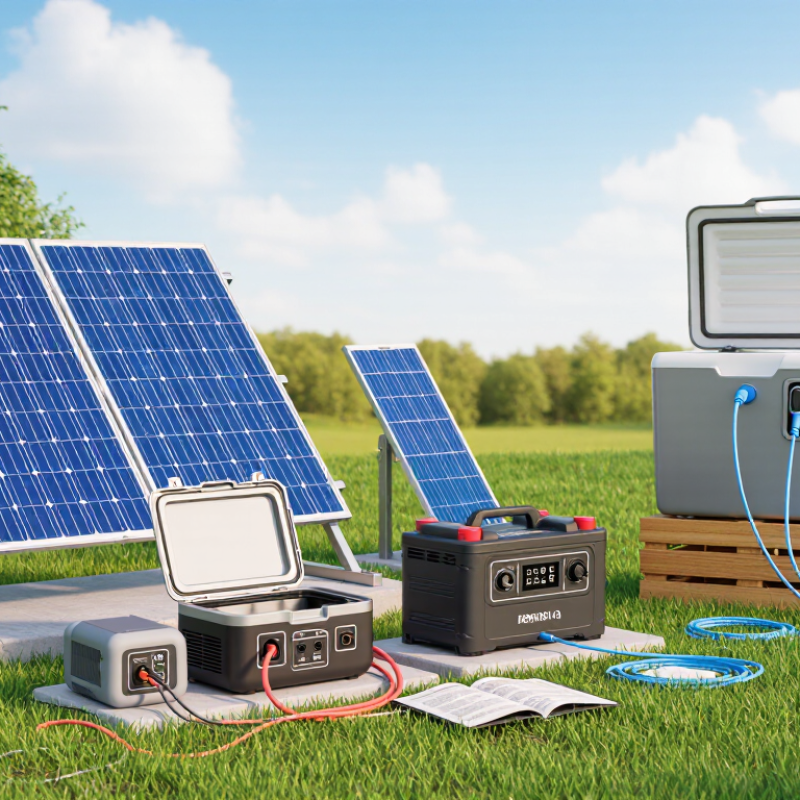
Identify Critical Loads and Calculate Their Daily Watt-Hours
Emergency backup starts with deciding what must keep running, not what would be convenient. Walk through your home and list devices needed for safety, communication, food storage, and basic lighting. A medical device, router, refrigerator, and two LED lamps may matter more than a television. Keep it practical. Note each device’s rated watts from its label or manual, then estimate how many hours you will use it each day.
Multiply watts by hours to find watt-hours (Wh). A 10-watt router running for eight hours uses 80 Wh. Two 8-watt lamps used for five hours add another 80 Wh. For a refrigerator, do not simply multiply its running wattage by 24; its compressor cycles, and startup demand can be much higher. Use a measured daily energy figure when available, or treat your estimate as provisional. Estimates can be wrong.
Add the daily Wh figures, then allow extra capacity for inverter losses and uncertain runtimes. A 20–30 percent buffer can be a useful starting point, but it is not a guarantee. Check both the kit’s usable battery capacity and its power rating: daily energy and startup surge are different limits. I would revisit the list after a practice run; real habits often use more power than expected.
Estimate Solar Output with NREL PVWatts’ 14% Default System-Loss Factor
How to Use a Solar Panel Kit for Emergency Backup Power?
During an outage, a solar panel kit can keep small essential devices running. Think phones, LED lights, radios, and a compact medical device. Do not trust the panel’s advertised wattage alone. That figure describes ideal laboratory conditions. Real sunlight changes hourly.
NREL PVWatts uses a 14% default system-loss factor for a more realistic estimate. The factor covers inverter losses, wiring resistance, temperature effects, dirt, and panel mismatch. For example, a 400-watt panel receiving four peak sun hours produces about 1.6 kilowatt-hours before losses. Applying the 14% factor leaves roughly 1.38 kilowatt-hours. Battery charging and conversion can reduce usable energy further. I learned this the hard way during a cloudy afternoon.
Enter your location, panel direction, tilt, and system size into PVWatts. Use local monthly results, not only the annual average. Winter production may fall sharply. Shade from a chimney can matter more than expected. Test the kit before an emergency. Connect the battery, charge a phone, and record the time. Then test a higher-demand appliance briefly, while checking the inverter’s limits. Leave room for cloudy weather. My first estimate was too optimistic because I counted every daylight hour as useful sunlight. It was not.
Size Battery Storage for Nighttime Loads and Round-Trip Energy Losses
A solar panel kit can keep essential appliances running when the grid fails. Start by listing nighttime loads, such as a refrigerator, router, lights, and a small fan. Record each appliance’s wattage and expected running hours. A 100-watt refrigerator running for eight equivalent hours uses about 800 watt-hours, although its compressor cycles on and off.
Battery size must include round-trip energy losses. If your nighttime demand is 2,000 watt-hours and the battery system operates at 85% round-trip efficiency, divide 2,000 by 0.85. You need about 2,350 watt-hours of rated storage. Adding a 20% reserve brings the target near 2,820 watt-hours. This reserve helps during cold weather, aging, or unexpected loads. Do not rely on the panel’s daily output alone. Cloudy conditions may leave the battery partly charged.
Tips: Test the kit before an emergency. Run the refrigerator overnight and check the battery level in the morning. Keep continuous loads modest. A small inverter can struggle with motor startup, even when average wattage seems low. My first estimate would probably miss standby power from chargers and networking equipment. That is why measuring real consumption is better than trusting labels alone. Leave room for error, and ask a qualified electrician to verify wiring, grounding, and transfer equipment.
Choose an Inverter for Continuous Demand and Appliance Startup Surge
How to Use a Solar Panel Kit for Emergency Backup Power?
Choose an inverter by checking both its continuous output and its surge rating. Continuous output must cover the appliances running at the same time, not just the largest one. A refrigerator may use modest power once running, yet need a brief surge when its compressor starts. Sump pumps and power tools can behave similarly.
Tips: Read each appliance’s label or manual for running and startup watts. Check how long the inverter can provide its listed surge; a high number alone may not tell the whole story. Leave some headroom, since real loads and estimates are rarely perfect.
Add the startup surge of the largest likely appliance to the other loads that may already be running. If two motors could start together, allow for that overlap. It happens.
Also confirm that the inverter’s battery voltage matches the kit’s battery system, and that the battery can supply the required power. A suitable inverter cannot compensate for an undersized battery. For sensitive electronics, check the inverter’s output waveform against the equipment’s requirements. Before an outage, test the setup with essential appliances one at a time, then try realistic combinations. Keep notes. My own load estimates would not be precise enough without that test.
Connect and Inspect the System Under NEC Articles 690 and 706
How to Use a Solar Panel Kit for Emergency Backup Power?
Connect and Inspect the System Under NEC Articles 690 and 706
Before an outage, map every connection: panels, charge controller, battery, inverter, and backed-up circuits. NEC Article 690 covers photovoltaic wiring, disconnects, grounding, and required labels. Article 706 addresses energy storage systems, including their disconnecting and overcurrent protection. Requirements depend on the NEC edition adopted locally and the system design, so have a qualified electrician check the installation. Small details matter. Inspect cable insulation for cuts, confirm connectors are fully seated, and make sure labels remain readable. A neat setup helps, but neatness alone proves nothing.
Check that the inverter and transfer equipment are designed to prevent power from flowing back into utility lines. Never improvise a connection through a household outlet. For battery systems, verify the equipment ratings, protective devices, ventilation requirements, and manufacturer-specified clearances. EIA reliability data recorded roughly 5.5 hours of average customer interruptions in 2022, underscoring why backup capacity and safe transfer equipment deserve attention. That figure is an average, not a promise about any household’s outage. Test the system under expected loads, such as a refrigerator and a few lights, and note how quickly the battery drains. Solar output changes with clouds and season. A checklist can miss a loose terminal; reinspection matters.
How to Use a Solar Panel Kit for Emergency Backup Power?
Connect and inspect the system under NEC Articles 690 and 706.
Illustrative running-power estimates for common backup loads—not measured product specifications. Check each device’s nameplate and account for startup surges when sizing a solar-and-storage system. Before connecting equipment, have a qualified electrician verify the PV and energy-storage wiring, disconnects, overcurrent protection, grounding, and transfer equipment against applicable NEC requirements and local rules.
Conclusion
Learning how to use a solar panel kit for emergency backup power begins with identifying essential appliances and calculating their daily energy needs in watt-hours. Estimate how much solar energy the panels may produce using local sunlight conditions, allowing for a 14% system-loss factor. Because solar panels may not generate power after dark or during poor weather, size battery storage to cover nighttime use and account for energy lost during charging and discharging.
Choose an inverter that can handle the combined continuous demand of the essential loads as well as the brief startup surge from appliances with motors. Before using the system, check that components are compatible, connections are secure, and the installation is protected from weather and electrical hazards. Follow applicable electrical requirements, including NEC Articles 690 and 706, and consult a qualified professional when needed. Regular inspections and realistic expectations about available sunlight help keep backup power reliable when grid service is interrupted.

 ConTech Solar