When considering solar energy, understanding how to wire solar panels in series vs parallel is crucial for optimizing performance. Wiring configurations directly affect efficiency, voltage, and current output. Each method has unique advantages and limitations that can influence system effectiveness.
In a series configuration, the voltage increases while the current remains constant. This setup can be beneficial in low-light conditions. However, if one panel is shaded or damaged, the entire system may suffer. On the other hand, a parallel connection maintains the same voltage but increases current. This can enhance performance in diverse conditions but requires careful consideration of wire gauges and safety measures.
Choosing the right method depends on your specific solar setup and energy needs. Familiarize yourself with each wiring technique's characteristics to avoid potential issues. A reflective approach may help identify challenges related to your installation. Connectors, voltage drop, and overall system design are essential factors needing attention.
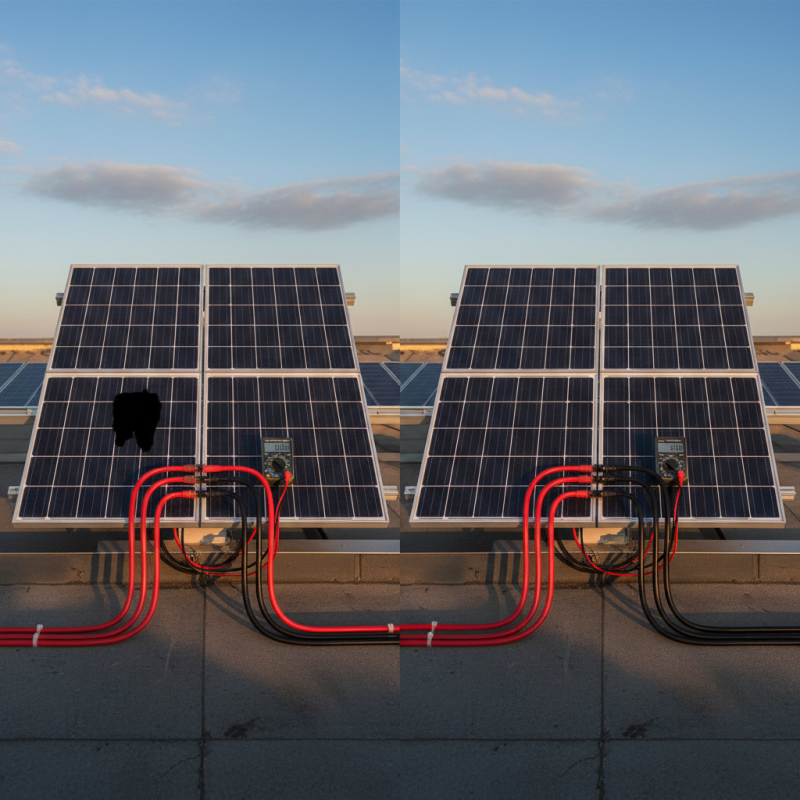
Wiring solar panels correctly can enhance your system's efficiency. Two primary configurations are series and parallel. Understanding these setups can help in achieving optimal performance.
In a series configuration, panels connect end-to-end. This boosts voltage while maintaining the same current. When shading occurs on one panel, it impacts the entire string. This setup is best for areas with consistent sunlight. However, it may not perform as well under partial shading.
Parallel configuration, on the other hand, connects panels individually to a common output. This maintains the same voltage while increasing current. It offers advantages in partial shade situations. Each panel works independently, minimizing losses. This approach can be more reliable in diverse weather conditions.
**Tips:**
Consider your location before choosing a wiring setup. Assess potential shading from trees or buildings. Proper placement can make a significant difference. Regular maintenance checks are important. Occasionally inspect connections and panel cleanliness. Reliability often stems from proactive care.
When wiring solar panels, understanding the efficiency impacts of series and parallel connections is crucial. In series connections, the voltage increases while the current remains the same. This can be beneficial in some scenarios, especially when working with higher voltages. However, shadows on one panel can drastically reduce the output of the entire string. This dependency often results in lower efficiency if not properly managed.
On the other hand, parallel connections maintain the voltage yet increase the current. This configuration can offer more consistency in power output, especially in varied sunlight conditions. If one panel has issues, others can still perform effectively. However, this setup requires thicker wiring to handle higher currents, which can add installation complexity. Balancing these factors is crucial for optimal efficiency. Choosing between series and parallel isn't always clear-cut. Reflecting on specific energy needs and site conditions will provide better insights. Each installation scenario is unique, warranting careful consideration of possible outcomes.
Wiring solar panels in series can improve the overall voltage output. When panels are connected in series, their voltages add up. For example, two 300-watt panels, each rated at 36 volts, can yield a total of 72 volts. This configuration is often recommended for smaller systems, making it efficient for homes with limited space. However, one must also consider potential shading issues. If one panel is shaded, its performance decreases. This can significantly affect the entire series string’s output.
On the other hand, wiring panels in parallel offers higher amperage. Here, current ratings are summed while the voltage remains constant. For instance, two parallel 300-watt panels, each providing 10 amps, will output 20 amps. This approach is suitable when shading is a concern. Research shows that parallel wiring can mitigate losses caused by mismatched panel performance. Still, it requires thicker wiring to handle increased current safely.
Understanding these configurations is crucial. A study by the National Renewable Energy Laboratory indicates that improper wiring can lead to up to a 30% loss in efficiency. Evaluating your unique installation site can prevent such inefficiencies. Balancing the benefits of each method will enhance the overall solar system performance.
Wiring solar panels in parallel offers several advantages for efficiency. When connected this way, each panel operates independently. This means that if one panel is shaded, the others still produce power. It's essential to choose the right wire gauge to handle the combined current effectively. Using thinner wires can lead to overheating and energy loss, which defeats the purpose of a solar setup.
Start by gathering necessary tools: wire cutters, connectors, and a multimeter. Measure the distance from each solar panel to your charge controller. This helps determine the wire length and gauge. Strip the ends of each wire before connecting them. Make sure to connect the positive terminals of all panels together. Then, connect all negative terminals. Proper connections are crucial. Poor connections can create resistance and reduce efficiency.
Take your time during the wiring process. A rushed job may lead to mistakes, causing safety risks or inefficiencies. It's also useful to double-check connections with a multimeter before finalizing your setup. Remember, a well-designed parallel wiring system can maximize your solar energy output, but attention to detail is key.
| Configuration Type | Voltage (V) | Current (A) | Total Power (W) | Ideal Use Case |
|---|---|---|---|---|
| Series | 24 | 5 | 120 | High Voltage Requirements |
| Parallel | 12 | 10 | 120 | Low Voltage Applications |
| Series | 48 | 2.5 | 120 | Residential Systems |
| Parallel | 24 | 5 | 120 | Battery Charging |
Wiring solar panels requires careful attention to detail. Mistakes in wiring can greatly reduce system performance. One common error is mixing different types of solar panels. Panels with different voltages and currents will lead to inefficiencies. Always match panels to ensure they operate similarly.
Using the wrong gauge of wire is another frequent issue. Using wires that are too thin can cause overheating. It can lead to energy losses. Make sure to use appropriately sized wires based on your panel output. Instead of assuming, double-check the specifications to avoid these pitfalls.
Another area to consider is the orientation of the panels. Improper angles can affect solar energy absorption. Ensure panels are positioned correctly for maximum sunlight exposure. Neglecting this simple detail can lead to significant energy loss. Take time to plan both the wiring and layout carefully for optimal performance.
: Series wiring connects panels end-to-end, boosting voltage but keeping current the same. Parallel wiring connects panels individually, maintaining voltage while increasing current.
Series wiring is best for areas with consistent sunlight. It helps improve overall voltage output.
Parallel wiring is more advantageous in partial shade. Each panel operates independently, reducing losses.
Shading on one panel in a series string affects the performance of the entire setup. This can lead to significant energy loss.
Assess potential shading and panel orientation. Proper placement can maximize sunlight exposure and improve efficiency.
Common mistakes include mixing different panel types and using incorrect wire gauges. Both can lead to inefficiencies and overheating.
Regular maintenance checks, such as inspecting connections and cleanliness, are essential.
The right wire gauge prevents overheating and energy loss. Using wires that are too thin can cause serious issues.
Yes, improper wiring can result in up to a 30% loss in efficiency. Evaluating your installation site is essential.
If in doubt, consult a professional. It’s crucial to ensure proper configurations for optimal performance.
In the pursuit of optimal solar energy efficiency, understanding how to wire solar panels in series vs parallel is crucial. Series connections increase voltage while maintaining the same current, making them ideal for applications requiring a higher voltage output. Conversely, parallel connections boost the current capacity while keeping the voltage constant, suitable for scenarios where higher current is needed. The article outlines key factors influencing efficiency, such as shading effects and wire gauge, which play a significant role in determining the best configuration for specific energy needs.
Additionally, a detailed step-by-step guide is provided for both wiring methods, alongside common mistakes to avoid that can hinder performance. By following these guidelines, users can maximize the efficiency of their solar panel systems, ensuring reliable energy generation that meets their requirements.
